
Behaviorism, Cognitivism, and Constructivism: each theory has its ideas about what makes learning effective and how we can create environments that help people learn better. These theories were developed before technology became such a huge part of our lives. While the old learning theories are still useful, we need to think about how technology and our changing world impact how we learn. Learning should be a dynamic and ongoing process. However, over the last twenty years, technology has changed everything—how we live, how we talk to each other, and especially how we learn. (Vaill 1996 pg. 42)
Connectivism is the integration of principles explored by chaos, network, complexity, and self-organization theories. Learning is a process that occurs within nebulous environments of shifting core elements – not entirely under the control of the individual. Learning (defined as actionable knowledge) can reside outside of ourselves (within an organization or a database) and is focused on connecting specialized information sets, and the connections that enable us to learn more are more important than our current state of knowing (Siemens 2005).
This theory frames learning as a dynamic and ongoing process. Constant change, unexpected developments, and shifting technologies all affect how and what we learn. Adaptability is as important as content mastery. The value lies in how we form connections with information, people, and systems.
Connectivism in today’s learning environments
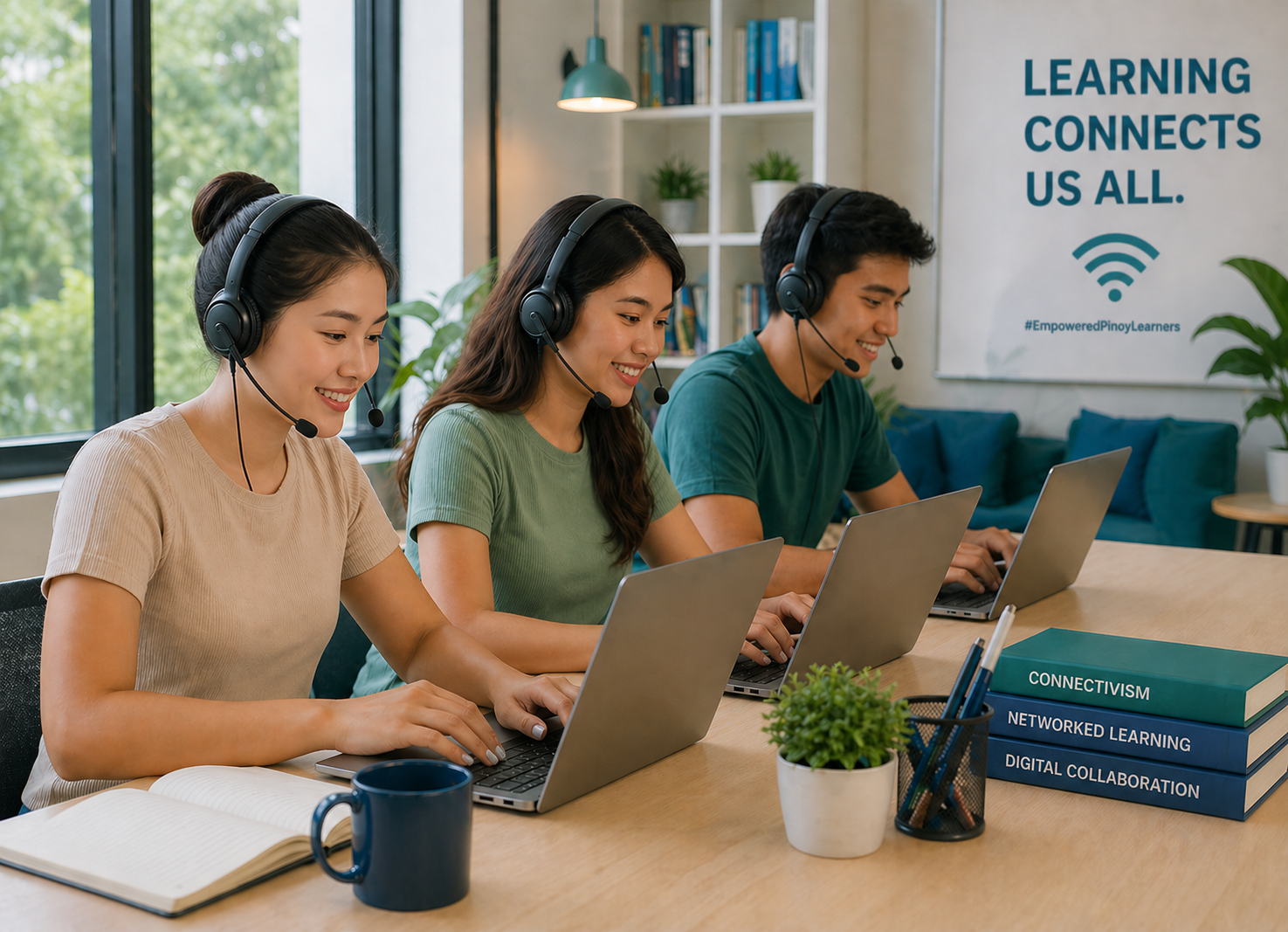
Digital platforms changed how learners participate. Social media, learning platforms, and online communities extend the classroom beyond physical space. Students collaborate, create, and publish their work for wider audiences. Filipino learners reenact literary classics and share their interpretations online. Discussion forums connect learners who never meet in person. Global platforms allow learners to learn together regardless of geography.
My earlier teaching experience introduced me to LMS-based collaboration and online discussions. My current work as an instructional designer deepened that experience. Through KadaKareer, I help design learning experiences for underserved Filipino youth who often lack early exposure to technology, career pathways, and mentorship. Connectivism now guides real design decisions.
Programs focus on digital literacy, career readiness, and AI awareness. Learners connect with mentors, volunteers, and peers across the country. These networks help students see new possibilities and build confidence in unfamiliar spaces. Learning becomes participatory and social. Access to knowledge expands beyond textbooks and classrooms.
Challenges in the Philippine context
The pandemic exposed the digital divide across the Philippines. Many learners struggled with unstable internet, limited devices, and shared family resources. Weather disruptions and weak signals interrupted classes and assessments. Access to technology remains uneven across regions.
Privacy and professional boundaries also surfaced as concerns. Parents expressed hesitation about online platforms. Schools and organizations responded with clearer policies, digital etiquette training, and stronger data protection practices. DepEd Order No. 049, s. 2022 reinforced professional boundaries between teachers and students in digital spaces.
These challenges demand practical responses. Instructional designers must think about accessibility from the beginning. Materials need to stay lightweight and mobile-friendly. Offline resources remain essential. Clear communication channels protect both learners and educators.
Opportunities for inclusive digital learning
Every barrier creates space for innovation. Organizations and schools now invest more in computer education and digital literacy. Programs increasingly include training in online collaboration, information evaluation, and responsible digital participation.
My work with KadaKareer reflects this direction. We design programs that connect students from underserved communities with industry mentors and volunteers. We build resources that function in low-bandwidth settings. We create learning journeys that support confidence, curiosity, and career awareness.
These efforts turn connectivism into action. Networks create opportunities. Connections open doors. Learners gain access to knowledge, guidance, and communities that once felt distant.
Technology will continue to reshape learning. Instructional design must respond with foresight and adaptability. Expanding digital access remains a long-term goal, yet daily actions already move that goal closer. Advocacy, partnerships, and inclusive design choices help bridge gaps in access and opportunity.
When networks grow stronger, education becomes more reachable for learners who need it most. Connectivism offers a practical guide for that work.
References
Goldie, J. G. S. (2016). Connectivism: A knowledge learning theory for the digital age? https://doi.org/10.3109/0142159X.2016.1173661
Siemens, G. Connectivism: A learning theory for the digital age. Handbook of Emerging Technologies for Learning. Retrieved from https://edtechbooks.org/k12handbook/connectivism#h2_MfKL