
Customer Verification Simulation
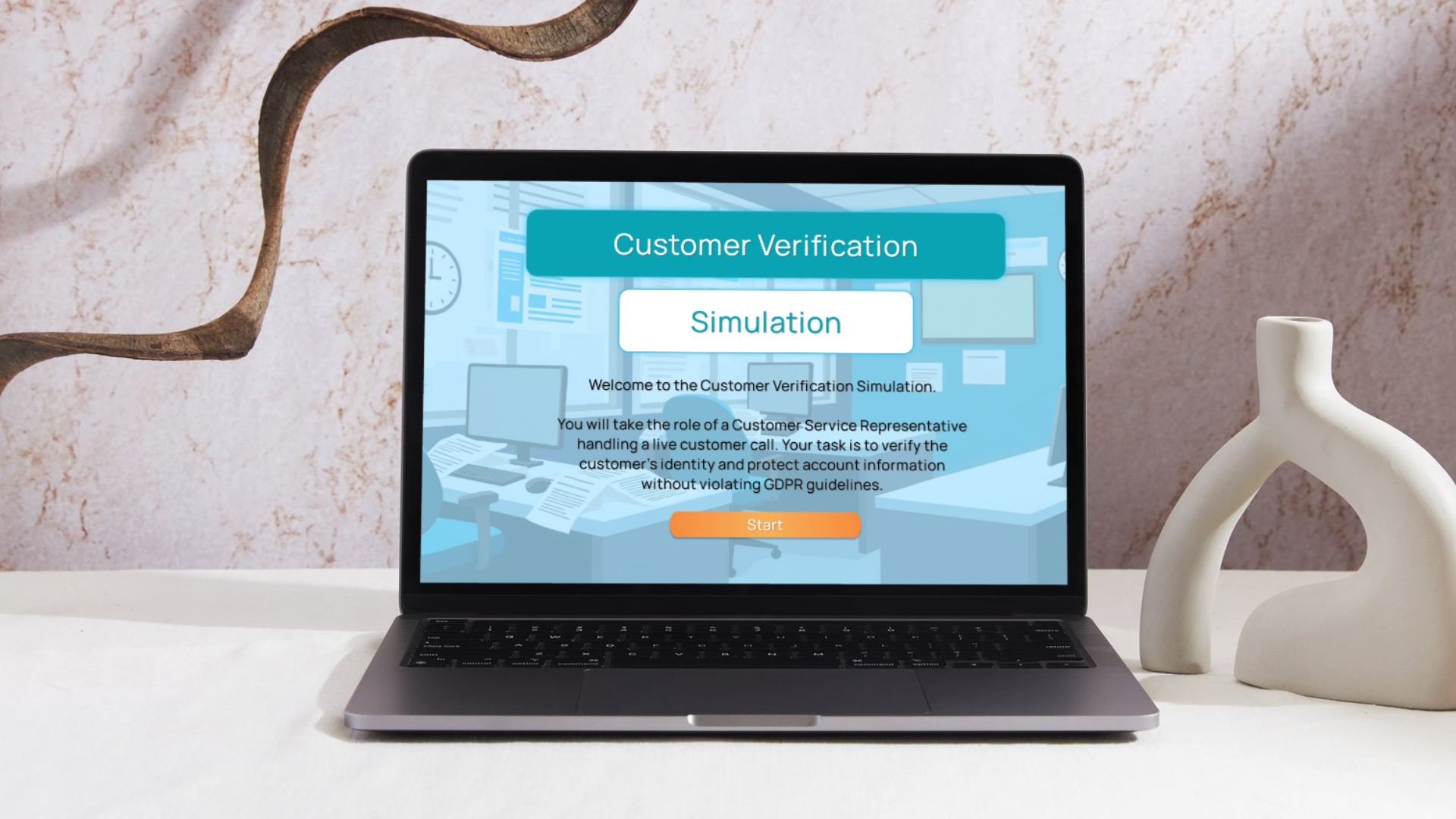
I designed this customer verification simulation to help customer service representatives practice safe decisions during a realistic inbound call before completing their final readiness check.
- Scenario-based verification practice
- Five-minute guided simulation
- Customer service representatives
Project overview
This interactive activity sits inside a structured data protection lesson for customer support teams. Learners have already reviewed verification rules and common disclosure risks. The simulation gives them a chance to use those rules during a realistic customer call.
Learners take the role of a customer service representative. Across three decision points, they review the customer’s request, choose the safest response, and receive immediate feedback. Incorrect choices lead to corrective feedback and another attempt.
The five-minute customer verification simulation fits inside a 45-minute instructor-led session. It serves as guided practice before learners move to the final readiness check in the next lesson.
-
 Project type
- Scenario-based eLearning lesson with an interactive verification simulation
-
 Audience
- Customer service representatives handling inbound calls and account support
-
 Delivery mode
- Instructor-led training with an embedded interactive eLearning activity
-
 Duration
- 45-minute session with a five-minute simulation
-
 My role
- Instructional designer, lesson planner, simulation designer, and content developer
-
 Tools
Tools
- Articulate Storyline 360, Canva, and Adobe Illustrator
The learning need
Customer service representatives handle sensitive information during routine calls. They may know the verification procedure, yet still face pressure to move faster, respond to an impatient customer, or continue when account details do not match.
A policy review could remind learners of the rules. It could not show how they would respond when a customer pushed for faster service. The lesson needed a safe place to make that decision and see what should happen next.
The design response
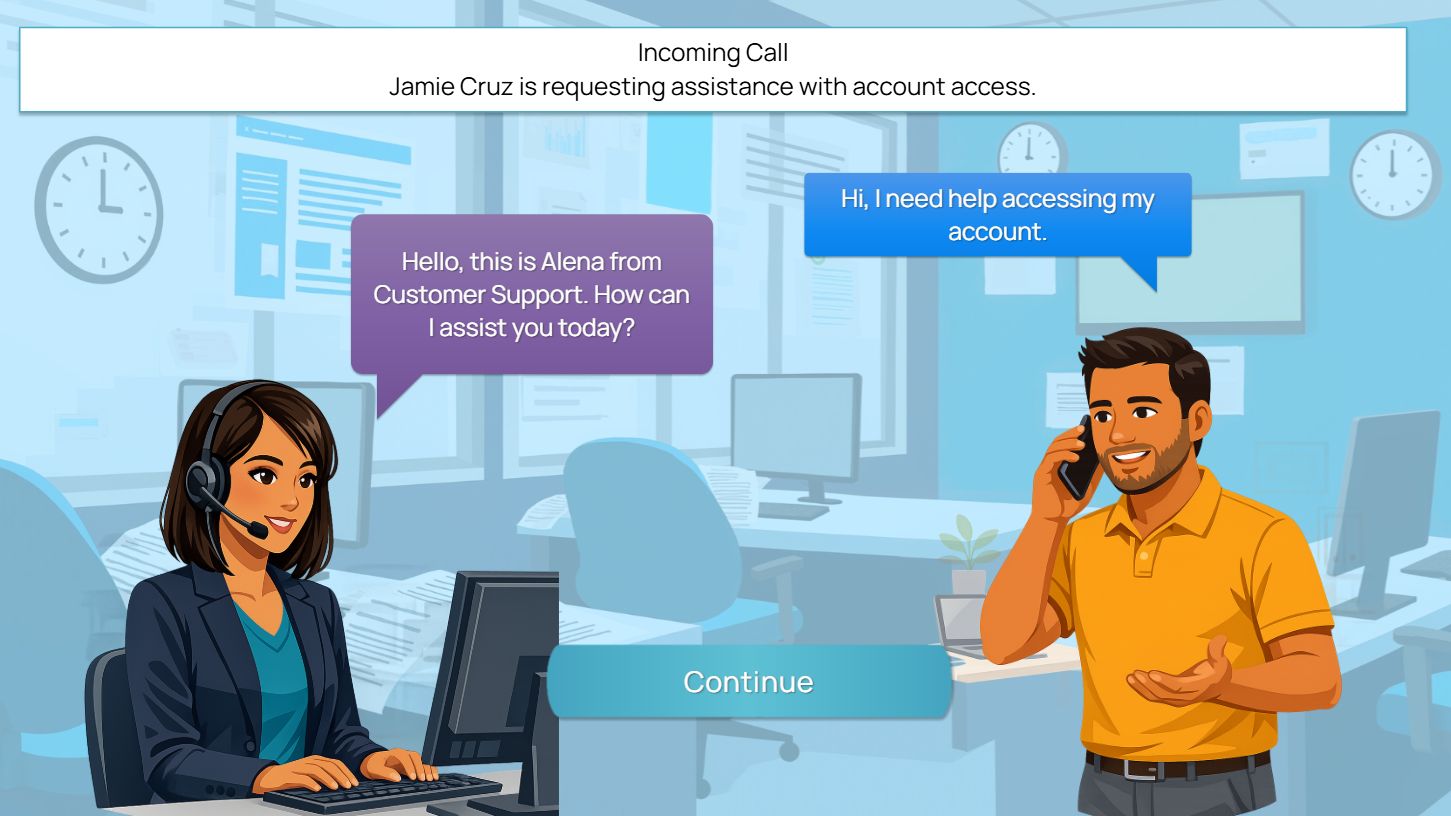
I designed a short call simulation with three decisions. Learners begin verification, respond when the customer asks them to skip a step, and confirm the process before providing account support.
Each choice produces immediate feedback. Correct responses explain why the decision protects customer information. Incorrect responses point learners back to the relevant procedure and allow a retry.
Who this was designed for
The learners are customer service representatives who handle inbound calls and account support requests. They already know the verification process. What they need is focused practice applying it while listening, responding, and managing customer pressure.
- They verify identity before discussing account information.
- They work in fast-paced service environments.
- They make decisions while keeping the conversation moving.
- They follow escalation procedures when information does not match.
Where the simulation fits
- Introduction: Data protection responsibilities
- Procedure: Verification and disclosure rules
- Risk review: Common mistakes during customer calls
- Guided practice: Customer verification simulation
- Readiness check: Final confirmation and reinforcement
Learning goals
The goal was to help representatives make safe verification decisions during a customer call, including moments when speed and customer pressure could tempt them to skip a required step.
- Apply the correct steps to verify customer identity.
- Maintain the procedure when a customer requests faster service.
- Recognize situations that require escalation.
- Select safe responses before discussing account information.
How the lesson came together
I worked from the live-call decisions learners needed to make, then placed the simulation between the knowledge review and readiness check.

Analyze the decision
I identified the verification choices, customer pressures, mismatch cues, and escalation points that required practice.
Map the call flow
I planned the dialogue, three decision points, response options, feedback, retries, and transition to the readiness check.

Build in Storyline
I developed the call screens, response states, corrective feedback, retry behavior, navigation, and completion screen.
Test and refine
I checked response logic, feedback timing, retry paths, readability, keyboard access, and the full five-minute flow.
Core simulation decisions
The call becomes more demanding across three decisions, while the interaction pattern stays consistent and easy to follow.
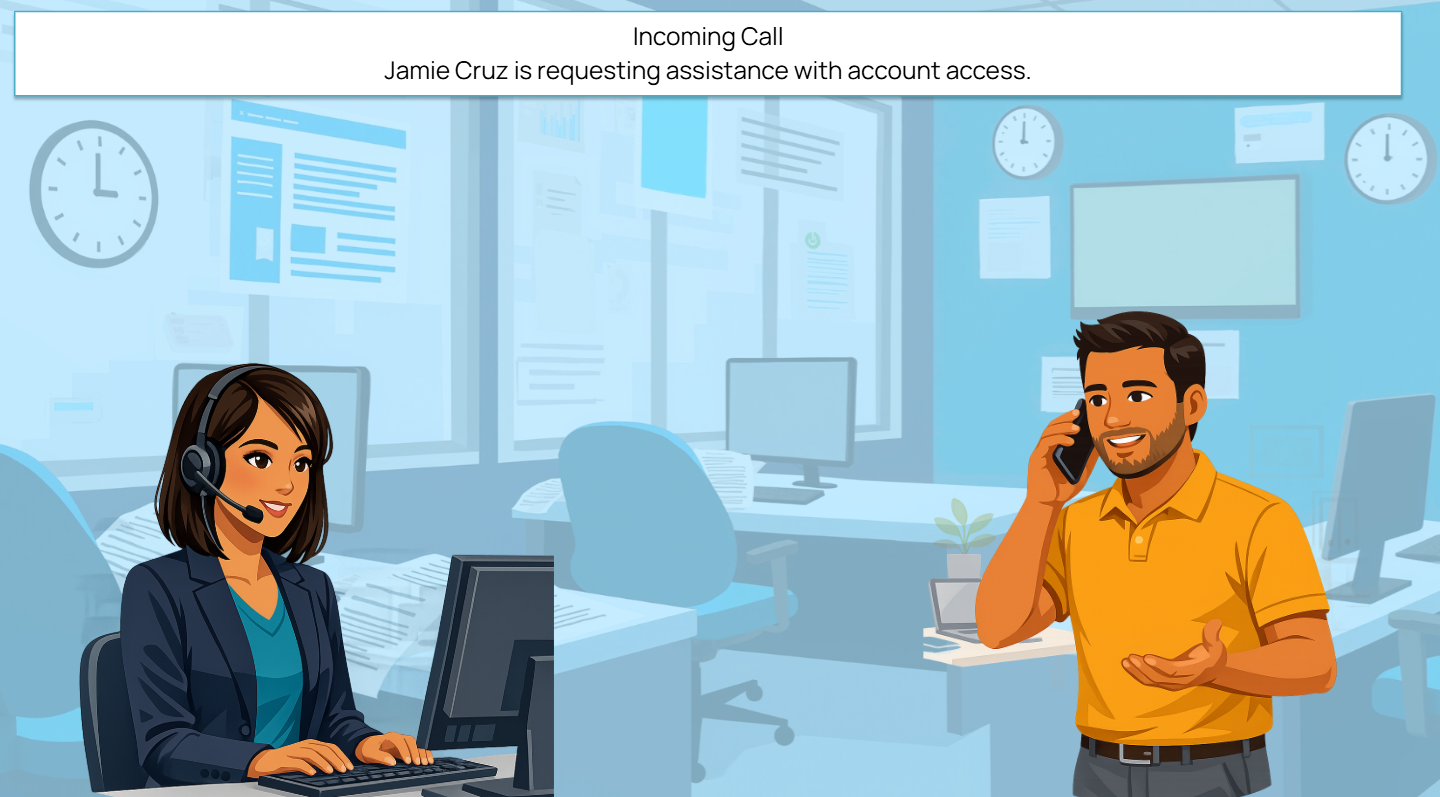
Begin verification
Learners choose how to begin the identity check before discussing the customer’s account.
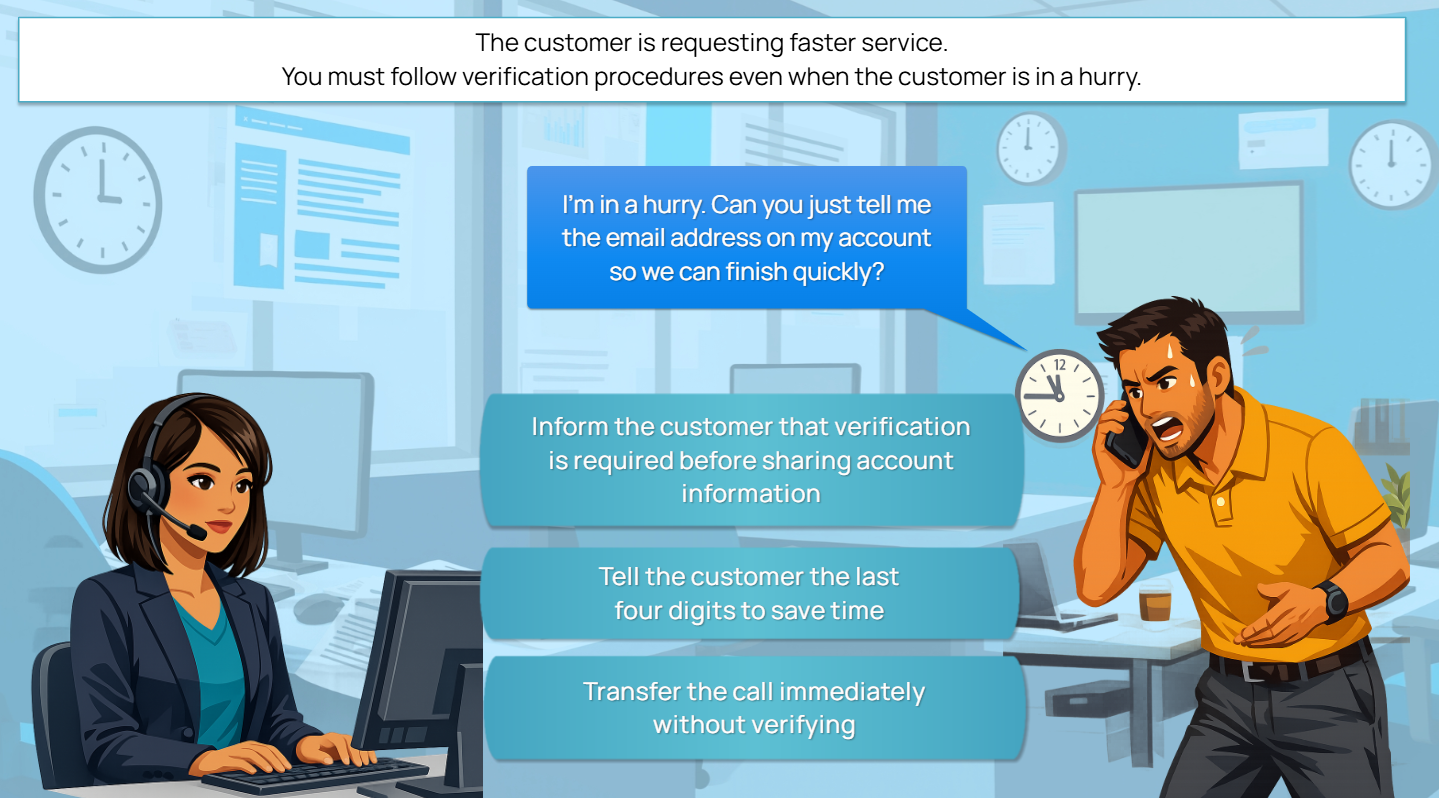
Respond to pressure
The customer asks for faster service, and learners must continue without skipping verification.
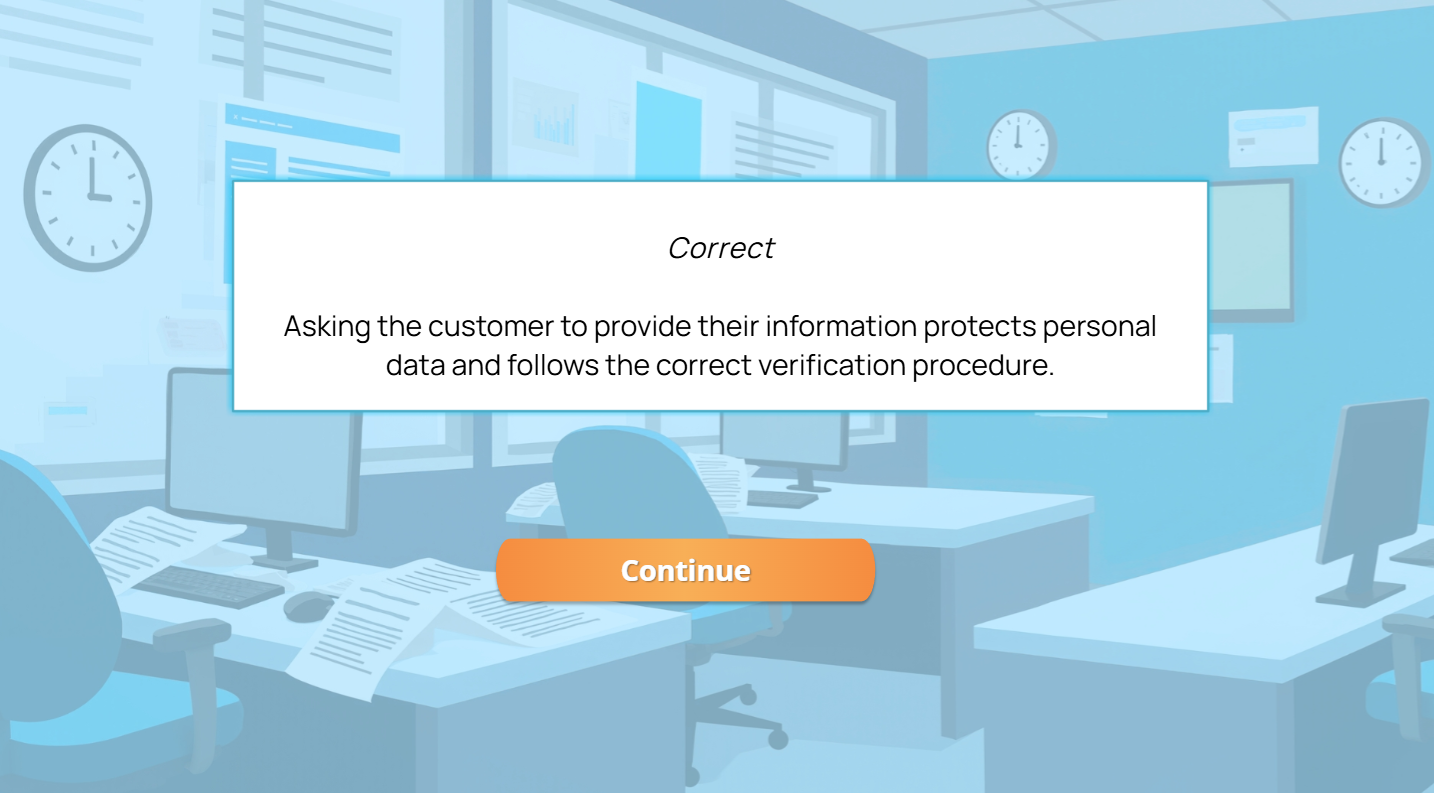
Confirm before support
Learners confirm that verification is complete before providing account assistance.
Practice now, check readiness next
The simulation gives learners feedback and retries while they are still practicing. The next lesson removes that support for the final readiness check. I have not collected formal outcome data yet. During implementation, I would begin with these measures.

Decision accuracy
I would track which verification decisions learners answer correctly and where errors repeat.

Retry patterns
I would review how often learners retry a step and how well the feedback helps them correct the next choice.
Readiness transfer
I would compare guided-practice decisions with performance in the unsupported readiness check.
Design choices that mattered
Place practice before assessment
Learners can make mistakes, read corrective feedback, and try again before the unsupported readiness check.
Keep every choice tied to the call
The dialogue and response options keep verification inside the customer conversation rather than separating it into a policy quiz.
Keep the activity brief
A five-minute simulation provides focused practice without taking over the 45-minute instructor-led session.
The intended result is more consistent verification during customer calls. Formal performance claims should wait until the simulation and readiness check generate implementation data.