
Building Rapport & Trust in MENA Sales Negotiations
I designed this decision-based Storyline practice activity for a broader module on client negotiation in MENA contexts. Learners apply the module guidance, choose how to respond, watch the Trust Meter change, and see how each decision affects the relationship.
- Guided practice within a broader negotiation module
- Approximately 3–5 minutes
- Three decision points with contextual coaching feedback
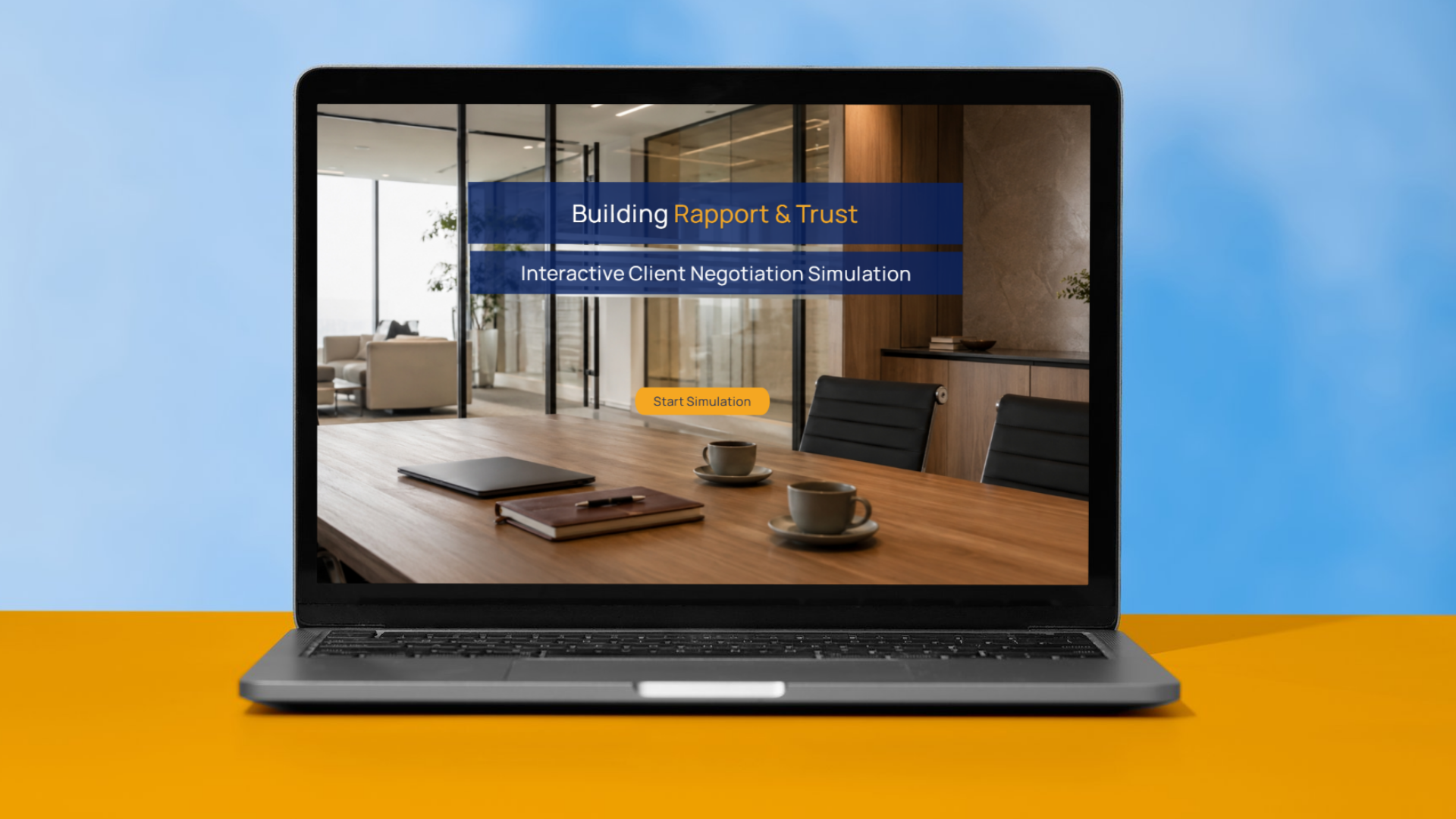
Project overview
This Storyline experience is a guided practice activity within a larger learning module. The surrounding module introduces rapport, professional communication, and cultural awareness for MENA client negotiations. This activity gives learners a short place to apply that guidance inside a realistic conversation.
The learner takes the role of Nadia Farouk, a business development manager preparing to present a recommendation to Omar Haddad, a long-term client who became cautious after a difficult renewal year. Before discussing the proposal, Nadia needs to rebuild confidence and learn what matters to the client.
Each choice changes the dialogue and updates a visible Trust Meter. Immediate coaching feedback then connects the response to professionalism, cultural awareness, and rapport-building behaviour.
This public case study uses screens to showcase the conversation, decision interface, feedback, and final outcome without publishing the interactive experience.
-
 Project type
- Scenario-based branching practice activity
-
 Audience
- Professionals preparing for client negotiations in MENA contexts
-
 Delivery
- Guided Storyline practice within a broader learning module
-
 Duration
- Approximately 3–5 minutes
-
 My role
- Instructional designer, learning experience designer, and eLearning developer
-
 Tools
Tools
- Articulate Storyline 360, Canva, Synthesia, and AI Image generator tool
Knowing the guidance is not enough
A module can explain business etiquette and rapport-building principles, yet professionals may still struggle to use them during a live conversation. Real interactions move quickly. A person must listen, interpret the situation, and choose language that feels respectful without losing the purpose of the meeting.
The project needed to offer a short and safe place to practice those decisions. Learners could respond to social cues, see an immediate consequence, and try another conversational choice without risking a real client or colleague relationship.
Who the experience supports
The learners are professionals who negotiate or discuss proposals with clients across cultures. They already have general workplace communication skills but may have limited familiarity with MENA business etiquette and relationship-building expectations.
What learners should be able to do
After completing this module practice activity, learners should be able to choose conversational responses that demonstrate professionalism and cultural awareness. They should also recognise how small choices can strengthen or weaken trust across an interaction.
Building rapport in MENA sales negotiations
I kept the module practice concise and gave every interaction a clear role in the learner’s decision process.
Practise inside a conversation
Learners respond in context instead of reading communication principles as passive content.
Make trust visible
The Trust Meter shows that rapport develops gradually across several conversational choices.
Explain each consequence
Coaching feedback explains why a response supports or weakens the interaction rather than stopping at correct or incorrect.
Keep the module practice focused
Three decision points provide repeated practice without turning a short microlearning asset into a long simulation.
How the practice activity moves
- Conversation begins: the learner enters a client-renewal negotiation.
- Decision point appears: the learner reviews several possible responses.
- A response is selected: the dialogue continues according to the choice.
- Trust changes: the Trust Meter provides a visible consequence.
- Coaching appears: feedback connects the choice to rapport-building behaviour.
- The conversation continues: the learner reaches the next decision.
- An outcome appears: the final state reflects the choices made across the interaction.
Inside the Storyline experience
These screens document the learner’s path through the module activity, from the conversation opening to a decision, coaching feedback, and the final outcome.
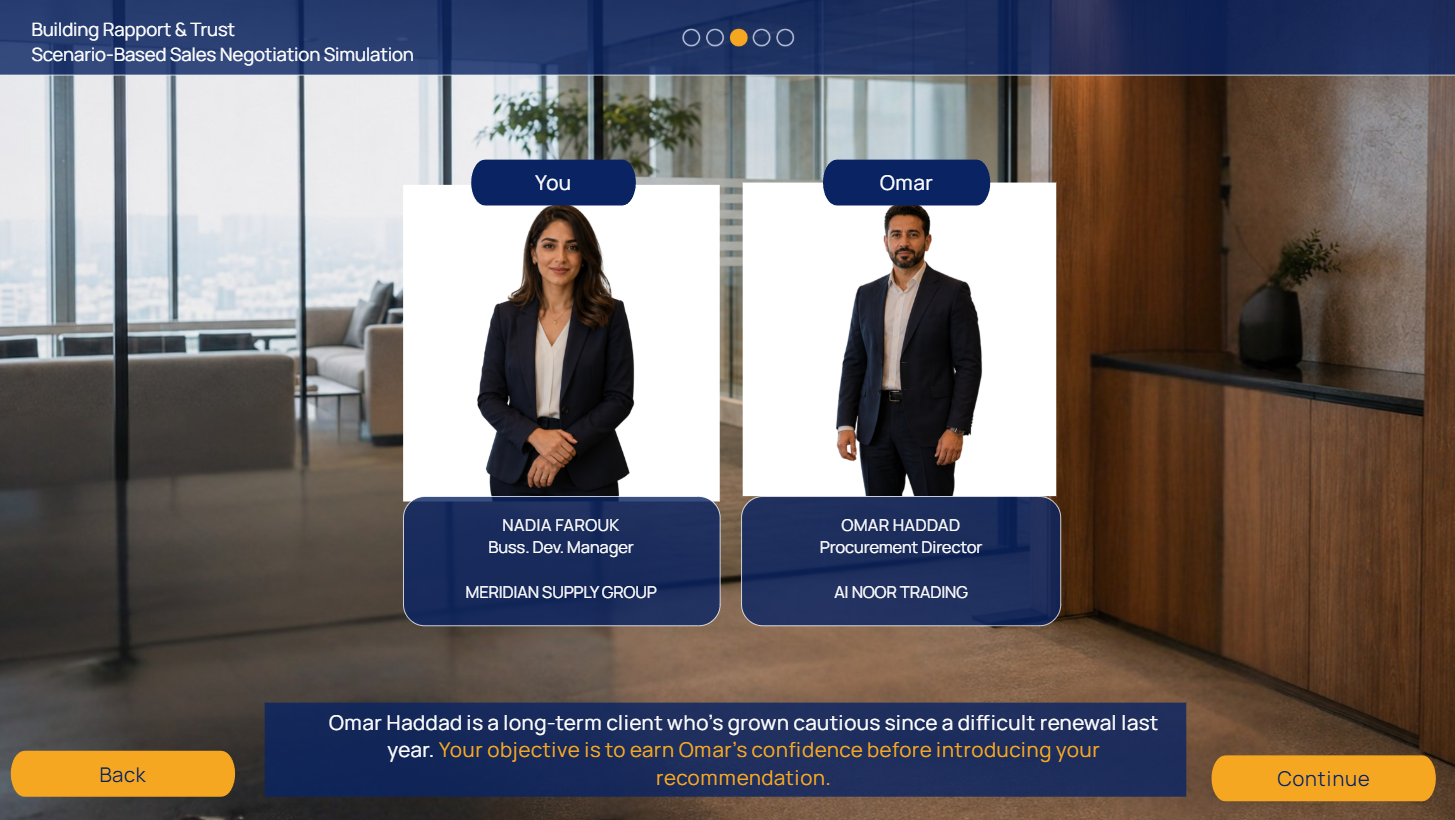
Conversation opening
The opening establishes the setting and prepares the learner to respond in role.
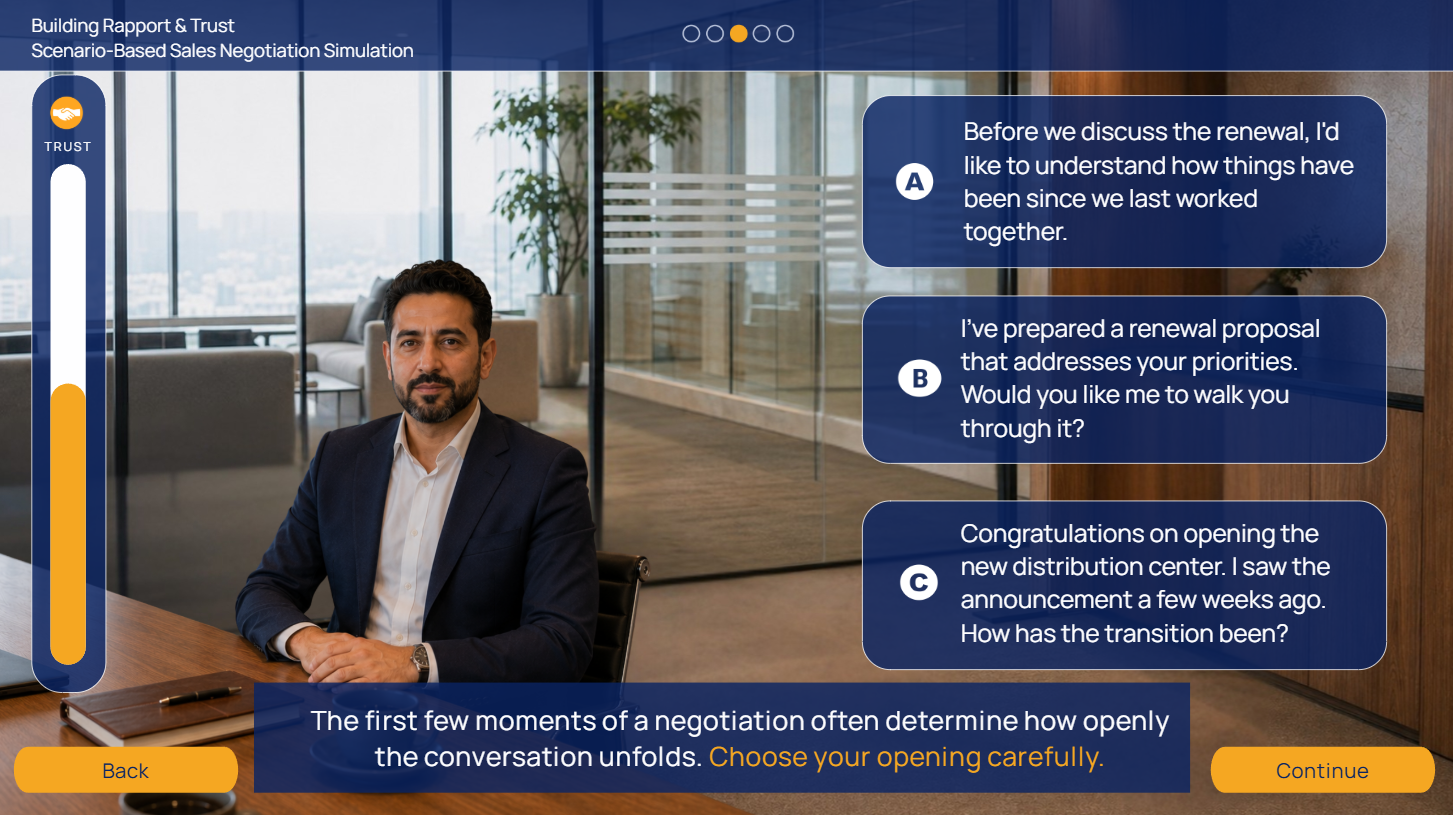
Decision point
The learner chooses a conversational response while the interaction remains in context.
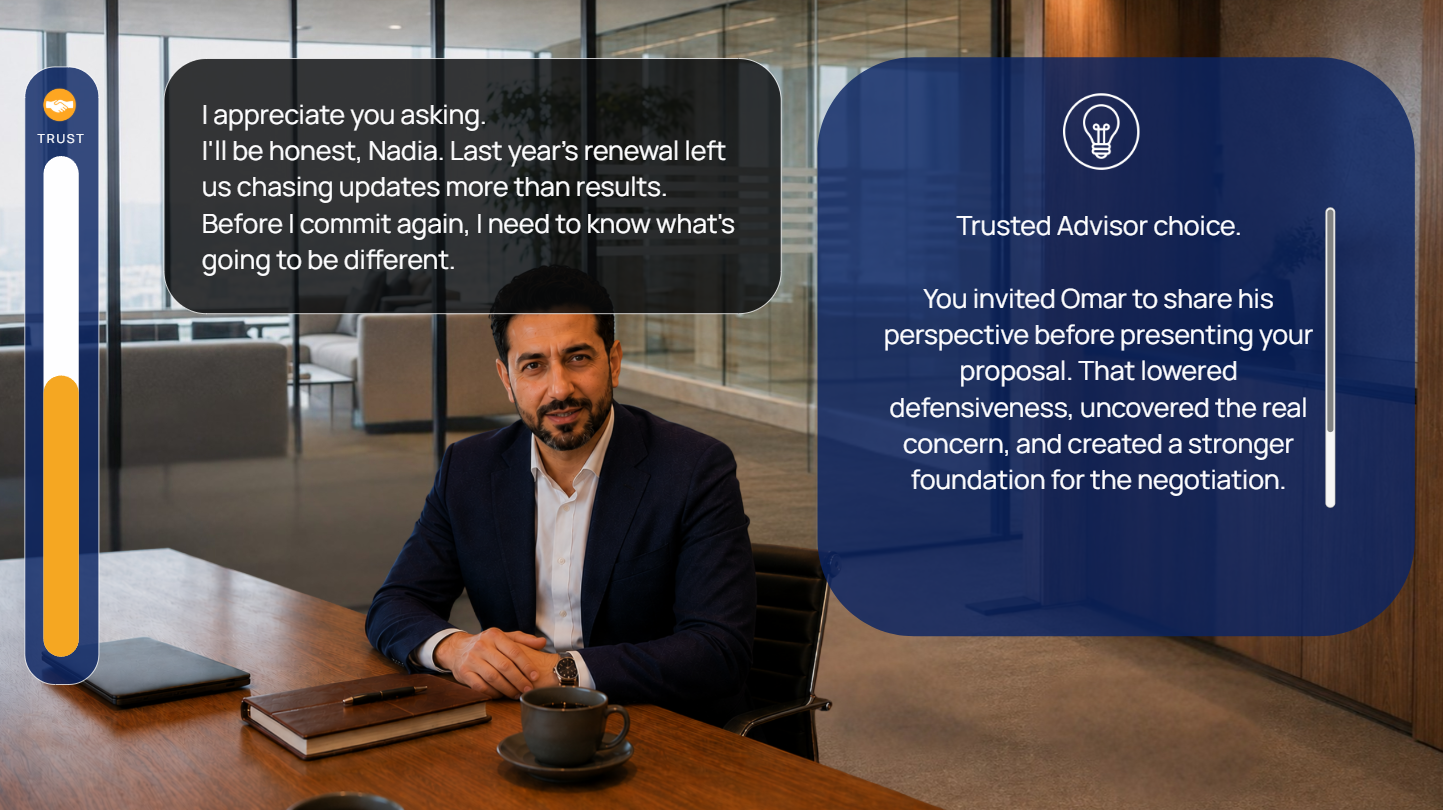
Trust and coaching feedback
The interface makes the relationship consequence visible and explains the choice.
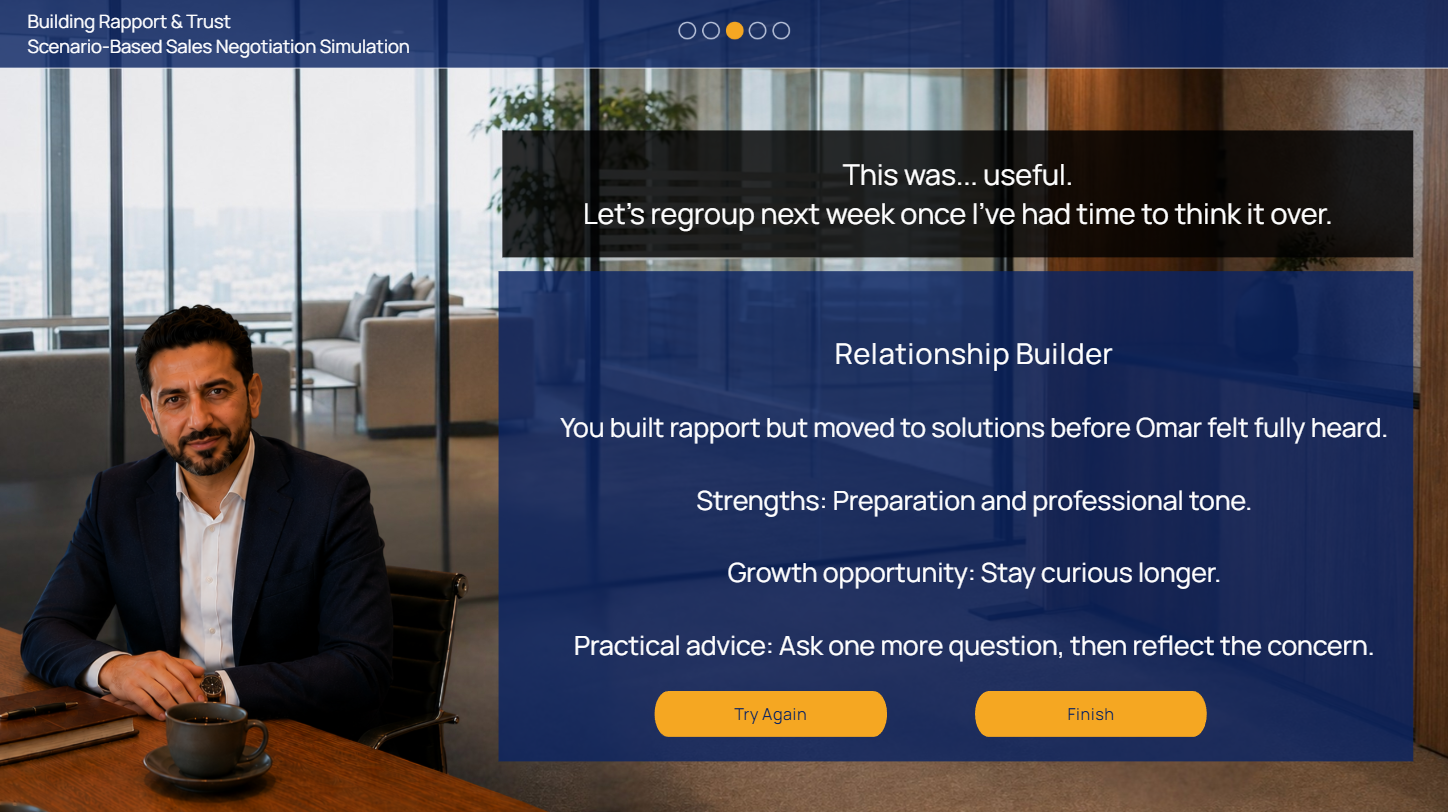
Conversation outcome
The final screen connects the result to the decisions made throughout the interaction.
From conversation map to Storyline build
I designed and developed the experience from concept through implementation. I started with a conversation map that recorded the three decision points, possible learner responses, feedback sequences, and changes to the Trust Meter.
Mapping the logic before development helped me check whether each response changed the experience for a clear reason. It also made the Storyline build easier to test because every trigger and variable could be traced back to the planned conversation flow.
- Branching conversation paths
- Variables, triggers, and conditional navigation
- Dynamic Trust Meter behaviour
- Contextual coaching feedback
- Multiple conversation outcomes
- Reusable slide layouts and learner controls
Iteration and QA
I replayed the pathways across several rounds and corrected the issues that interrupted progression or weakened the learner flow.
Branching logic
I tested each response path for broken links, missing triggers, and unintended dead ends.
Trust Meter behaviour
I refined variable changes so the visual trust response matched the selected conversation choice.
Navigation and pacing
I simplified progression and checked that feedback did not interrupt the conversation more than necessary.
Accessibility review
Keyboard access, focus order, contrast, alternative text, and feedback load remain items for final verification before any accessibility claim.
What this project demonstrates
The project connects conversation writing, instructional decisions, interaction logic, and Storyline development within one short experience.
Scenario-based learning
Workplace communication becomes a decision learners can practise in context.
Conversation design
Dialogue, social cues, and response options remain tied to the learning objective.
Performance-focused feedback
Coaching explains the consequence of a choice and supports a better next decision.
Branching logic
Variables and triggers connect learner choices to trust changes and conversation outcomes.
Storyline development
Reusable layouts and controls support a consistent interaction across the experience.
QA and iteration
Repeated pathway testing improved progression, feedback behaviour, and navigation consistency.
If I continue developing it
I would add more business situations, richer character responses, and feedback that adapts to patterns across several decisions. I would also complete the remaining accessibility checks before expanding the build.
Representative learners would test any new scenarios before I treated them as finished features. Their responses would help me check whether the dialogue feels credible and whether the coaching supports a better conversational decision.